
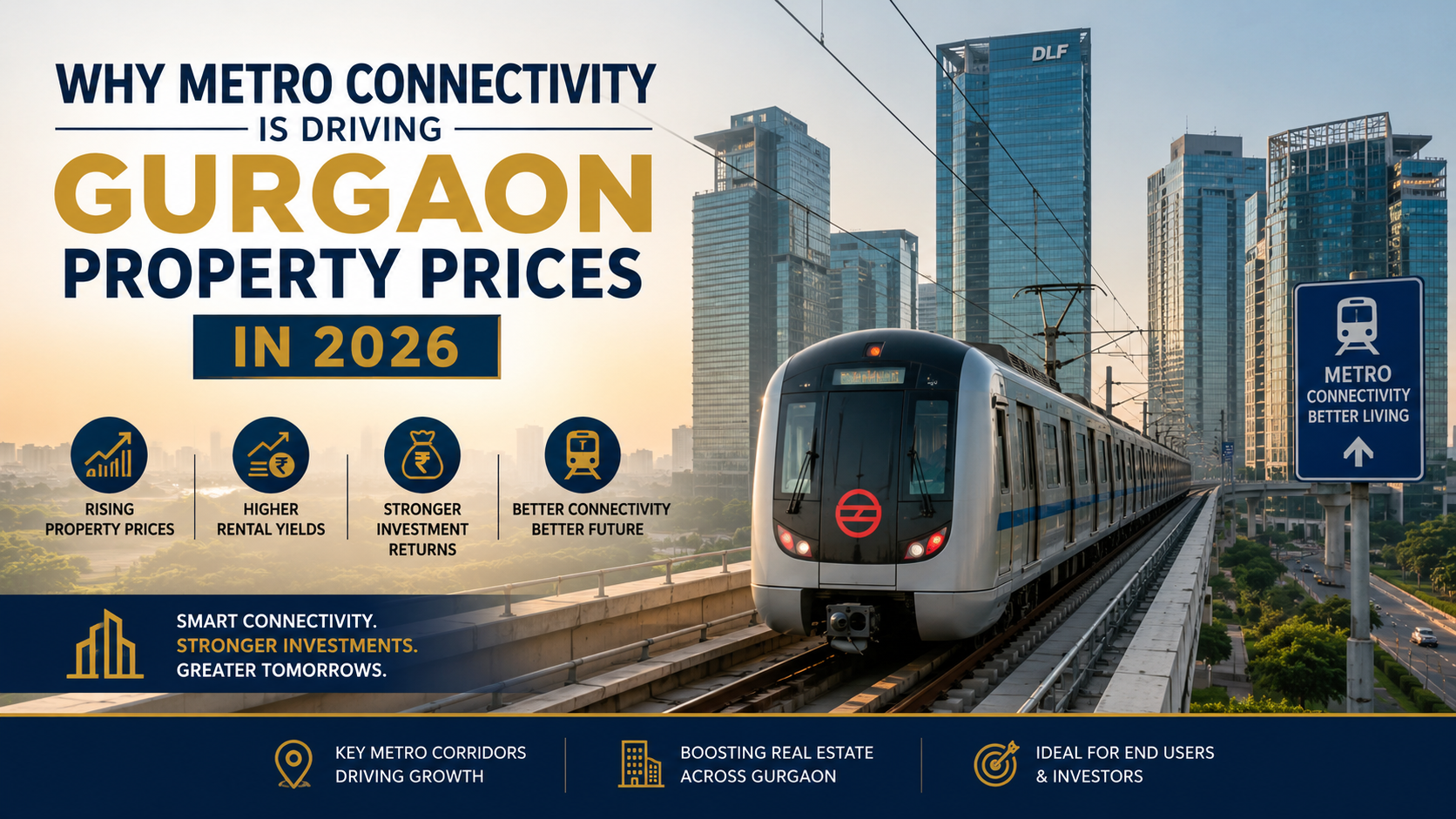
Why Metro Connectivity Is Driving Gurgaon Property Prices.
Gurgaon property prices have experienced remarkable growth as the city has shifted from a tranquil satellite town to one of India’s most dynamic real estate destinations. In the past decade, Gurugram has seen swift development in residential, commercial, and mixed-use spaces. Among the various factors contributing to this surge, metro connectivity has emerged as a significant driver, propelling property prices upward and drawing in more investors eager to tap into the city’s real estate market.
The relationship between transportation infrastructure and property values is pretty clear, but Gurgaon takes it to another level. The metro has reshaped the real estate landscape, transforming areas that used to struggle into prime investment territories. This shift is largely due to the better connectivity that the metro brings, making these locations much more appealing to buyers.
As Gurugram develops its infrastructure further, knowing how metro access affects property appreciation is becoming increasingly important for homebuyers and investors alike.
How Gurgaon Property Prices Are Shaped by Infrastructure Development
Infrastructure development has long been essential in shaping the landscape of property values. Enhancements like better roads, expressways, flyovers, and public transport systems make it easier for people to travel, which reduces commute times. As a result, there’s often a surge in demand for properties in areas that are easily accessible.
Among all infrastructure developments, metro connectivity often delivers the fastest and most visible impact on real estate prices.
Metro systems have a way of revolutionizing how we commute every day. They lessen our need for personal vehicles, help keep travel costs down, and deliver trustworthy transit solutions. This shift makes buyers more inclined to pay a bit more for properties situated near metro stations.
This trend is evident across major Indian cities such as Delhi, Bengaluru, Hyderabad, and Pune—and Gurgaon is no exception.
How Gurgaon Became an Infrastructure-Led Real Estate Market
Two decades ago, Gurgaon was mainly seen as a place with industrial zones and a patchwork of housing developments. However, the arrival of multinational corporations, IT parks, and corporate offices changed the game, turning it into a key business hotspot. With more jobs popping up, the demand for housing naturally followed suit.
The Delhi Metro’s reach into Gurgaon was a pivotal moment. Regions adjacent to the metro stations witnessed a swift rise in both residential and commercial activity. Developers quickly understood the significance of this connectivity and began to introduce new projects along the metro routes.
Over time, metro access became a key factor influencing property buying decisions. Today, properties near metro stations command significantly higher prices compared to those located farther away.
Why Metro Connectivity Increases Property Prices
- Reduced Travel Time
Time is one of the most valuable resources for urban residents. Professionals working in Cyber City, Udyog Vihar, Golf Course Road, and Delhi prefer homes that offer seamless commuting. A nearby metro station drastically reduces travel time and enhances daily convenience.
This convenience drives demand, which in turn pushes Gurgaon property prices upward.
- Higher Rental Demand
Rental demand is consistently strong in metro-connected areas.Young professionals, students, and corporate employees prioritize accessibility.
Properties near metro stations typically experience lower vacancy rates and offer better rental returns.
For investors, this makes such locations highly appealing
- Improved Social InfrastructureMetro connectivity often leads to the development of surrounding infrastructure. Retail hubs, office spaces, schools, hospitals, and entertainment zones tend to grow around metro corridors, creating well-rounded urban ecosystems that boost property demand.
Several sectors in Gurgaon have witnessed rapid development following improved connectivity.
- Increased Commercial Activity
Businesses prefer locations that are easily accessible. Companies look for office spaces that employees can reach conveniently. As a result, commercial developments near metro stations see strong demand, which further drives residential growth in nearby areas.
- Future Appreciation Potential
Investors often make decisions based on upcoming infrastructure projects. Even the announcement of a new metro line can lead to an increase in property prices in nearby areas. Buyers anticipate improved connectivity and long-term value appreciation.
This trend is clearly visible across multiple sectors in Gurgaon.
The Impact of the Rapid Metro in the Gurgaon property prices
The Rapid Metro significantly transformed Golf Course Road and its surrounding areas.
Before its introduction, commuting options were limited. However, improved connectivity boosted demand for both residential and commercial properties.
Luxury developments in this region gained popularity among high-income professionals and corporate leaders, leading to substantial appreciation in property values.
Today, Golf Course Road stands as one of Gurgaon’s most premium real estate destinations.
Dwarka Expressway and the Metro Advantage
Dwarka Expressway has emerged as one of India’s fastest-growing real estate corridors.
Proposed metro connectivity and ongoing infrastructure development have strengthened investor confidence. Developers have launched several premium residential projects along this stretch, anticipating strong future demand.
Experts believe that upcoming metro expansion will further accelerate property appreciation in this region.
Southern Peripheral Road’s Growth Story
The Southern Peripheral Road (SPR) is another example of infrastructure-driven growth.
In recent years, this corridor has attracted major developers and large-scale residential projects. Proposed metro connectivity is expected to enhance its investment potential even further.
Sectors along SPR are already witnessing rising demand from both end-users and investors, making it a promising long-term investment destination.
The benefits of the Rental Market
Having a metro connection also makes it easier to increase property values and rental income. Properties on the outskirts of the metro stations attract more tenants. These are preferred places to work as they allow reduced commute time and cost. The more people who want to rent, the more that is good for landlords. The capital appreciation combined with rental income makes properties in the metro area very attractive to investors. Homebuyers are making connectivity a priority.
Connectivity is a priority for homebuyers. The tastes of the buyers have changed a lot over time. Amidst all this, the features and the size of the apartments were once the major deciding factors. Connectivity is a priority these days.
Today’s homebuyers ask themselves questions like:
- How close is the nearest metro station?
- Does there seem to be an intended metro line nearby?
- What is the average amount of time that it takes to commute each day?
- What changes do you anticipate will be made to the infrastructure?
Developers have responded, emphasizing closeness to metro stations as a key selling point.
Challenges Still Exist
While metro connectivity offers a lot of benefits, it also brings its fair share of challenges. Infrastructure projects often run into delays because of land acquisition problems, the need for regulatory approvals, and various construction obstacles. Investors should take a close look at project timelines before diving in. Plus, just because a metro announcement is made doesn’t mean prices will shoot up right away. It’s crucial to consider the bigger picture, including overall infrastructure, job centers, and community amenities before making any investment decisions.
What is the future of Gurgaon Real Estate?
Gurgaon’s real estate market is closely linked to the development of infrastructure. The next phase of development will be defined by metro expansion, better road networks, and new connectivity projects. The emerging sectors are expected to see a lot of appreciation with the improvement of connectivity. Early investors who recognize these growth corridors can reap long-term gains. Meanwhile, home buyers will remain focused on convenience, accessibility and quality of life.
Final Thoughts
The Gurgaon story clearly shows that connectivity drives value.
The impact of Metro access is not just on transportation, but on where people live, where businesses locate, and where investors invest.
With the city’s continued expansion, homes along metro corridors will continue to be some of the most sought after properties.
Connectivity is a convenience and lifestyle benefit for homebuyers. It offers investors solid appreciation and rental income potential.
One thing is clear in the fast-changing urban landscape: once metro connectivity is in place, property values go up.
According to Naveen Yadav, MD, Amaya Landbase, metro connectivity is one of the biggest growth drivers for Gurugram’s real estate market. Improved connectivity not only makes everyday travel easier but also enhances property demand, creating long-term value and strong return potential for both homebuyers and investors.
At Amaya Landbase, we don’t just help you find a property—we help you invest where the future is growing.

Comments