Ready-to-Move vs Under-Construction: Which Is Better?
There are great opportunities for both ready-to-move and under-construction homes. The answer depends on your financial situation, investment objectives and time horizon. The debate over Ready-to-Move vs Under-Construction properties is common among today’s homebuyers. Both(Ready-to-Move vs Under-Construction properties) have their own merits, so knowing the difference can help you make the right purchase.
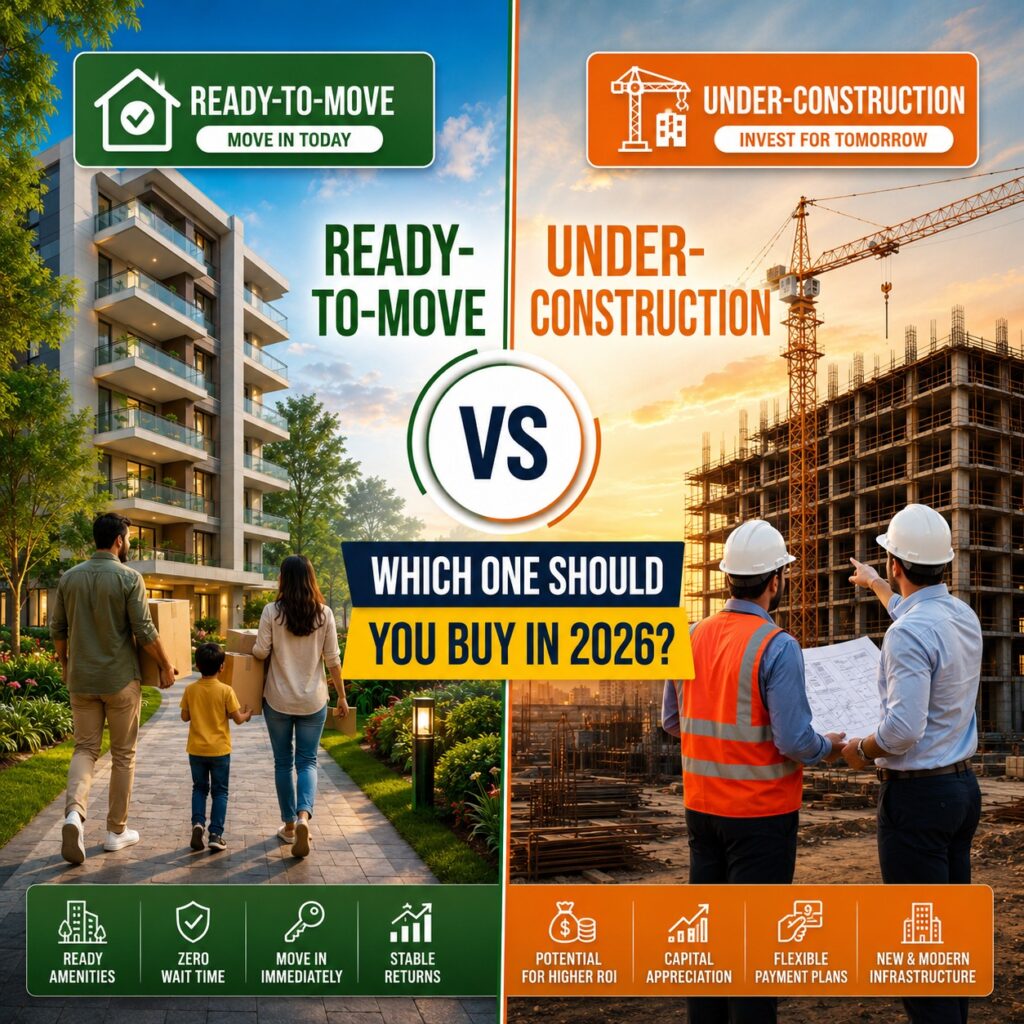
Should you buy a ready-to-move home or an under-construction property?
Both options have unique advantages. Meanwhile, there are some disadvantages to each. So, the selection of the right one will depend on your budget, goals, and time frame.
We compare both types of properties in detail in this guide. At the end, you will know which one is best for you.
What Is a Ready-to-Move Property?
A ready to move home is a home that is completed. The building is complete and you can move in right after you purchase it.
The property is already built, so buyers can check everything out before deciding.
Benefits of Ready-to-Move Homes
- Immediate Possession : The instant possession is one of the greatest benefits. Construction need not be completed. Rather, you can move in once the paperwork is finished. This is perfect for families who require a home promptly.
- No Construction Risk : Construction delays are common in real estate. However, with a ready home, there is no uncertainty. You know exactly what you are buying.
- What You See Is What You Get : Buyers can inspect the property before purchase.
For example, you can check:
- Construction quality
- Room sizes
- Natural lighting
- Ventilation
- Amenities
- Parking
- Neighborhood
As a result, there are fewer surprises later.
- Immediate Rental Income : If you are buying for investment, a ready property can generate rental income immediately. Therefore, your investment starts working from day one.
- No GST on Ready Homes : In many cases, ready-to-move properties with a completion certificate do not attract GST. This can reduce your overall purchase cost.
Drawbacks of Ready-to-Move Homes
Although ready homes offer convenience, they also have limitations.
Higher Purchase Price
Ready properties usually cost more than under-construction projects.
This is because buyers pay for completed construction and immediate possession.
Limited Customization
Once construction is complete, you cannot make structural changes.
Therefore, customization options are minimal.
Older Inventory
Some ready homes may have older designs or fewer modern amenities.
Consequently, buyers should inspect the property carefully.
What Is an Under-Construction Property?
An under-construction property is still being built.
Buyers purchase the home before completion.
Possession is given after construction is finished.
Benefits of Under-Construction Properties
- Lower Prices
Under-construction homes generally cost less than ready properties.
Therefore, buyers can enter premium locations at a lower price.
- Flexible Payment Plans
Most developers offer attractive payment options.
Examples include:
- Construction-linked plans
- Down payment plans
- Flexi payment plans
- Possession-linked plans
As a result, buyers can manage their finances more comfortably.
- Better Appreciation Potential
Property prices often increase during construction.
Therefore, early buyers may enjoy significant capital appreciation by possession.
This makes under-construction homes attractive for investors.
- More Unit Choices
Early buyers usually get the best selection.
For example, they can choose:
- Higher floors
- Park-facing units
- Corner apartments
- Better views
- Modern Design and Amenities
New projects often include:
- Smart home features
- Clubhouses
- Swimming pools
- Co-working spaces
- EV charging
- Green landscapes
These features increase future value.
Drawbacks of Under-Construction Properties
Construction Delays
One of the biggest concerns is delayed possession.
Although RERA has improved transparency, delays may still happen.
Project Risk
Buyers depend on the developer’s reputation.
Therefore, always choose a trusted builder with a strong delivery record.
Double Financial Burden
Many buyers continue paying rent while also paying home loan EMIs.
This increases monthly expenses.
GST Applies
GST is generally applicable to under-construction residential properties.
Therefore, buyers should include this cost in their budget.
Ready-to-Move vs Under-Construction: Detailed Comparison
| Factor | Ready-to-Move | Under-Construction |
| Possession | Immediate | Future |
| Price | Higher | Lower |
| GST | Usually No | Applicable |
| Rental Income | Immediate | After Possession |
| Risk | Very Low | Moderate |
| Appreciation | Moderate | High Potential |
| Inspection | Possible | Sample Flat Only |
| Customization | Limited | Better Options |
| Payment | Full/Home Loan | Flexible Plans |
| Best For | End Users | Investors |
Which Property Is Better for End Users?
A ready to move home is typically the best choice if you intend to move in right away. You don’t have to wait for construction to finish. Furthermore, you can check everything before purchasing. This gives peace of mind.
Which Property Is Better for Investors?
An under-construction property may provide higher returns if you’re looking for long-term appreciation. In addition, the value of the property can increase prior to possession. But, always opt for projects that have good RERA compliance and reputed developers.
Factors to Consider Before Buying
Before making your decision, evaluate these important factors.
Budget
Calculate the complete cost.
Include:
- Registration charges
- Stamp duty
- GST (if applicable)
- Interior costs
- Maintenance charges
- Parking fees
Location
A great location often matters more than the property itself.
Look for:
- Metro connectivity
- Schools
- Hospitals
- Business hubs
- Shopping malls
- Future infrastructure
Builder Reputation
Research the developer carefully.
Check:
- Previous projects
- Delivery timelines
- Customer reviews
- RERA registration
- Financial stability
Loan Eligibility
Talk to your bank before finalizing the purchase.
Understand:
- EMI amount
- Processing fees
- Interest rates
- Loan tenure
Investment Goal
Ask yourself:
- Do I want to live here?
- Am I investing for appreciation?
- Do I need rental income?
Your answers will help you choose the right property.
There is no universal winner.
Instead, the right choice depends on your priorities.
Choose a ready-to-move property if you:
- Need immediate possession
- Want lower risk
- Prefer seeing the actual home
- Want instant rental income
Choose an under-construction property if you:
- Want lower entry prices
- Can wait for possession
- Seek higher appreciation
Prefer modern amenities.
Final Thoughts
There are great opportunities for both ready-to-move and under-construction homes.
The most suitable option will depend on your financial situation, investment objectives, and time horizon.
When it comes to certainty and convenience, a ready home is best.
But if you’re looking for long-term value and appreciation, an under-construction property can be a good investment.
When choosing a project, check the projects, legal documents, builder’s history and total ownership cost before making your decision. Making an informed purchase today can give you financial security and peace of mind for years to come.
Comments